What happens to a 5,000-seat stadium the week after the last out of the season?
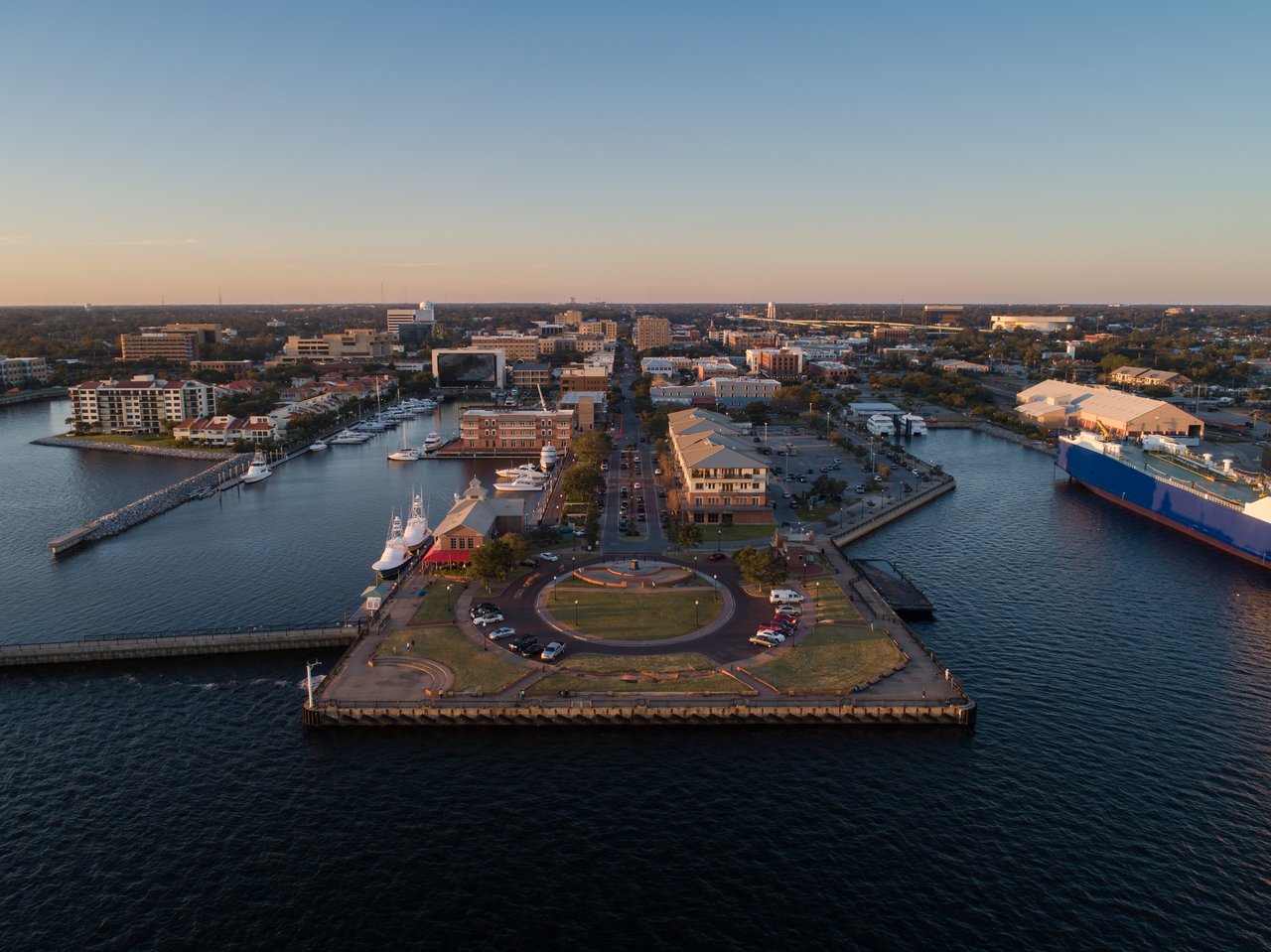
If you assume the answer is nothing, you're thinking about Blue Wahoos Stadium the way a lot of people do: as a summer building that goes dark once the Southern League standings settle and the team packs up for the winter. The actual fall calendar at Vince J. Whibbs, Sr. Community Maritime Park says otherwise. Between October 8 and November 13, the ballpark and its surrounding grounds host six distinct public events, none of them baseball, each pulling a different crowd for a different reason. The stadium doesn't quiet down after the season. It changes jobs.
A calendar built to outlast the season
The lineup, as announced by the Blue Wahoos organization, runs like this:
- October 8: the 16th annual First City Art Center Pumpkin Patch
- October 15: the Soul Bowl youth football day, presented by Levin Papantonio, Troy Rafferty, Cox, and Florida Blue
- October 20: Studer Community Institute's Light Up Learning fundraising dinner, hosted by former NFL player Josh Sitton
- October 28: a screening of The Rocky Horror Picture Show on the stadium videoboard, kicking off Halloween weekend
- November 4: Bourbon on the Bases, a new interactive dinner under the lights
- November 13: Pensacola EggFest, a barbecue competition and fundraiser
Six events in thirty-six days. During the actual season, the ballpark's identity is built around repeating weekly themes: Winging Wednesday, Mullet Thursday, Fireworks Saturday. It's a rhythm, but it's the same rhythm every week. The fall calendar has no rhythm at all. It moves from art to football, then a black-tie fundraiser and a cult movie screening. The venue isn't repeating a format. It's hosting whoever needs 38,000 square feet of exhibition space and a view of Pensacola Bay that week.
A pumpkin patch older than a lot of Pensacola's newer landmarks
The Pumpkin Patch on October 8 isn't a novelty add-on. It's in its 16th year, run by First City Art Center, and it works like an art sale disguised as a seasonal outing: thousands of handcrafted glass and ceramic pumpkins, made by local artists, sold throughout the day at the ballpark, with proceeds going back to the art center. General admission from 1 to 4 p.m. is free. Early access "first pick" tickets are sold separately for people who want first crack at specific pieces before the crowd arrives.
Sixteen years means this event predates most of the recent openings that tend to dominate "what's new in Pensacola" conversations. It's not new. It's a fixture that happens to live inside a baseball stadium for one day a year, which is a strange kind of stability for a piece of programming that easily could have found a smaller, quieter home somewhere else in the city.
The day youth football takes over the outfield
October 15 belongs to the Soul Bowl, a full day of youth football spread across both Blue Wahoos Stadium and the adjoining Community Maritime Park grounds. Games are scheduled at 9:00 a.m., 10:30 a.m., 1:30 p.m., 2:30 p.m., and 4:00 p.m., meaning the site runs as an active youth sports venue from morning through late afternoon. The event carries sponsorship from Levin Papantonio, Troy Rafferty, Cox, and Florida Blue, which is a detail worth sitting with for a second: this is a law firm and an insurer underwriting a full day of kids' football at a Double-A ballpark, not a ticketed adult event with a beer sponsor.
That's a different audience than the pumpkin patch draws the week before, and a different one again than the wine-and-bourbon crowd that shows up two events later. The stadium isn't building loyalty to one type of visitor. It's cycling through several in the same month.
Whose name is on the field, and why it matters
The field itself carries a name most people who've been to a Wahoos game have probably never noticed: Admiral Fetterman Field, honoring Admiral Jack Fetterman's role in helping create the park. It sits inside a facility built to hold more than 5,000 people, with the Randall K. and Martha A. Hunter Amphitheater positioned to overlook Pensacola Bay, supporting a covered stage roughly 50 by 70 feet and grass seating for up to 3,000 more.
The playground next to the stadium tells a similar story about who actually built this place. It was funded in part by a $100,000 donation from Impact 100, a local women's giving circle, and the project was spearheaded by the Rotary Club of Pensacola as part of the club's 100th anniversary. The playground reflects a civic project involving a range of Pensacola organizations. The fall calendar brings a range of events to the park after baseball season ends.
Two dinners, two very different rooms
The two evening events on the fall calendar look similar on paper and feel nothing alike in practice. Light Up Learning, on October 20, is Studer Community Institute's annual fundraising dinner, held on the field itself, with Josh Sitton, a former Super Bowl champion, hosting an evening built around a silent auction and a gourmet meal. It's a fundraiser first and a dinner second.
Bourbon on the Bases, arriving two weeks later on November 4, flips that order. It's a new addition to the calendar this year, an interactive dinner under the stadium lights with executive chef Travis Wilson preparing a menu paired with bourbon cocktails. There's no listed charitable beneficiary attached to it the way there is with Light Up Learning or the EggFest that follows a week and a half after. It's simply a food and drink experience that happens to use the same field where kids played five games of youth football three weeks earlier.
Putting these two events back to back on the calendar makes the range obvious. The stadium can host a formal nonprofit gala and, two weeks later, a chef-driven bourbon dinner, and neither one feels like it's borrowing the other's format.
Why the fall calendar looks the way it does
None of this is really about baseball, which is the point. A stadium is expensive infrastructure to leave idle for seven months of the year, and Community Maritime Park was never built by, or for, one purpose. It was funded in pieces by organizations like Impact 100 and the Rotary Club, designed with an amphitheater sized for concerts as much as ballgames, and handed a name, Admiral Fetterman Field, that has nothing to do with the Blue Wahoos at all. The fall calendar shows the park in use after the season ends: not a dark building, but a rotating set of civic events, from an art center celebrating sixteen years of pumpkin sales to youth football backed by a law firm and an insurer.
That's a useful thing to know if you live anywhere near downtown Pensacola and have only ever thought of the ballpark as a summer destination. October and November are, if anything, the stadium's busier months. They're just busy with a different kind of crowd every week.
If you're weighing what a home near Community Maritime Park is actually worth, from proximity to a venue that runs year-round programming to the practical realities of buying on the waterfront, The Mark Lee Team can walk you through it. Request a complimentary market evaluation and get a straight answer grounded in what's actually happening in this corner of Pensacola, not just what the season implies.